I moved!

I moved! You can find me at my new online home, KaylaPins.com!

Showing posts with label Nutrition. Show all posts

Thursday, March 27, 2014

Eating Iron!

Yesterday I had a student rambling random facts. One is that if you collected all of the iron in a human body, you could make a nail.  It's true! And I happened to have some Raisin Bran handy to prove it.

Just follow the instructions posted here. The instructions call for Total brand cereal and a very strong magnet but I was able to do it with Raisin Bran and a binder clip. It was an interesting activity while my students waited for their eggs to cook.  This could be part of a nutrition activity about fortification or minerals.

Friday, January 24, 2014

Use MyFitnessPal's Barcode Scanner in Classroom Calorie Calculation

Earlier this school year I wrote about my love for MyFitnessPal.com, especially after the not-so-conveniently timed federal government shutdown.

If you can believe it, I love this app even more today!

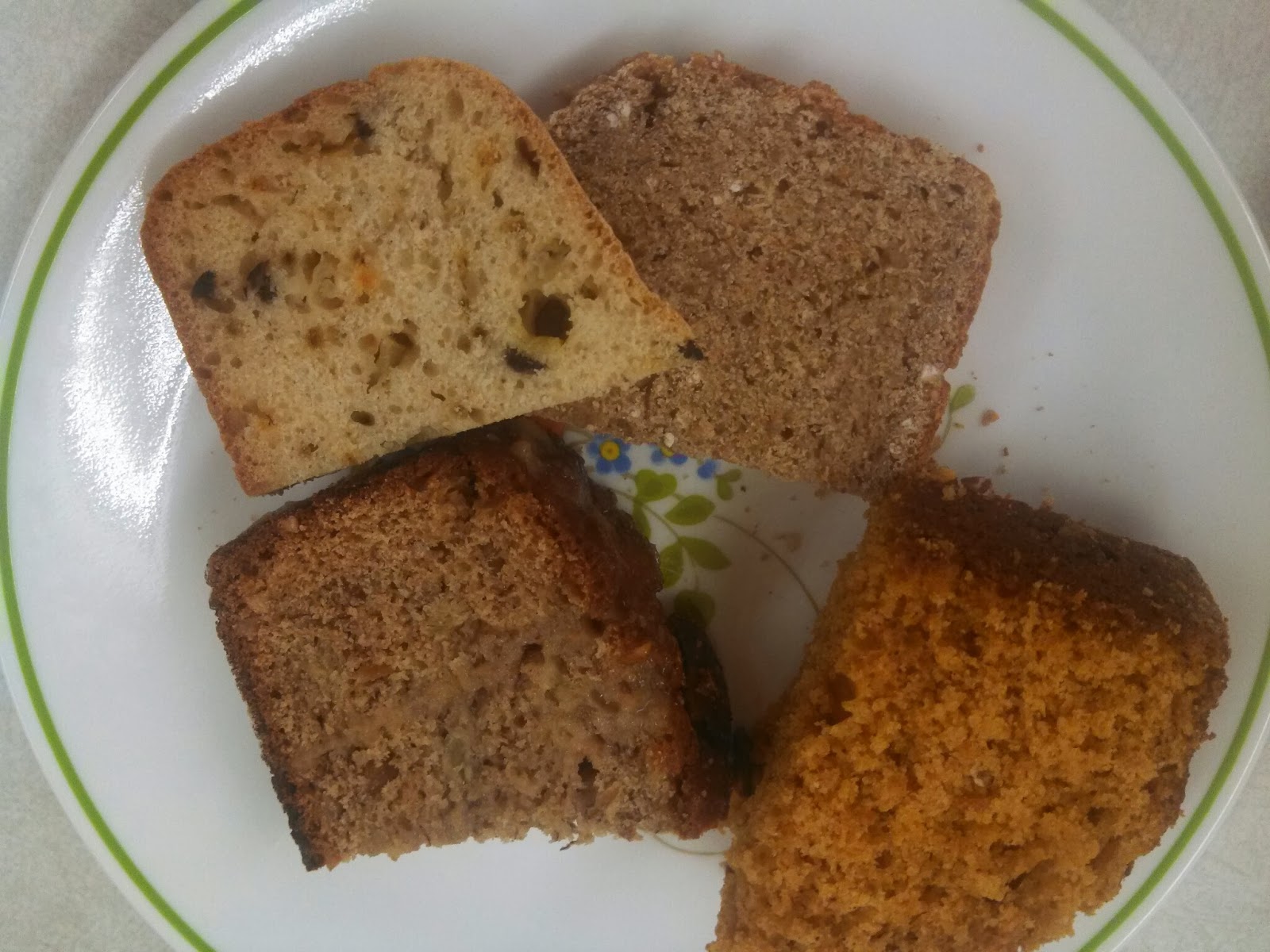
My Bakery students are in the throws of their Create Your Own Quickbread project and made their first draft muffin today.  While the muffins baked students were to calculate unit cost, calorie count, and Healthy Kids viability.

One group was short a person so they did not want to leave their oven to go to the media center. Instead they attempted to use MyFitnessPal on their phone. A senior in my class had the app on her cell phone because she has to track her food and activity for a health class. I knew there was a way to enter recipe information on the app but I assumed it would be tedious compared to a computer.

That I was before I knew.... drum roll... that a BAR CODE SCANNER existed. No amount of capital letters and exclamation points can account for the happy dance I did around my classroom.  It made calculating calories so EASY! Instead of searching... and searching... and searching for the closest ingredient, students could scan my ingredients and enter in the exact information.

I am so happy with the bar code scanner that I may be using MyFitnessPal more often in both class activities and in my personal life.

Friday, January 17, 2014

Healthy Kids Guidelines for Quick Breads

Today the Bakery students evaluated the nutritive value of yesterday's quick breads according to the Healthy Kids Guidelines. (View my materials HERE) An email from our school lunch director says:
"Here are the limits for Healthy kids Act items:
calories=200
fat=less than or equal to 35% of calories
trans fat=less than or equal to .5gm/serving
sodium=200mg
sugar=less than or equal to 35% of calories
must be at least 50% whole grain
I would love more muffin recipes. I only have one that meets these guidelines"
One trouble we ran into is that Cooking Light lists only carbohydrates instead of breaking down into sugar and fiber.  To calculate grams of sugar we multiplied the cups of sugar in the recipe by 200 (grams of sugar in one cup) and divided that number by twelve servings.

Spoiler alert! My students found that each recipe has the potential to meet the guidelines.  The olive bread has a bit too much salt which can easily be eliminated.  Each of the breads needs more whole grains to fit guidelines which is also an easy fix.

Next week we will collaborate with our school lunch director to create quick bread recipes of our own to be served for school breakfast.

Wednesday, November 27, 2013

Beware of Fad Diets! Class Bulletin Board

This year my Food and Nutrition students collaborated with our school nurse to do a bulletin board about fad diets. After learning about what a balanced plate should look like (according to USDA guidelines) students researched a fat diet and drew what a plate would look like.  Needless to say there was not a lot of balance!
We posted the plates and fad-diet tips on the bulletin board near the nurse's office with MyPlate pictures that I cut from free hand-outs.

You can download the fad diet tips here and the fad diet research worksheet here.

Tuesday, November 26, 2013

Paula Deen Pumpkin Bars Healthy Overhaul

PumpkinsNo Paula Deen recipe would be complete without lots of added fat! That's why this pumpkin bar recipe from Food Network made such a great subject for our healthy substitutions lab.

This lab works great with five student groups.  Each kitchen makes a different recipe. The recipes in my materials are not labeled, so refer to the following list:
  1. Original recipe
  2. Add fiber with whole wheat flour and ground flax seeds
  3. Cut sugar and add extra flavor with cinnamon
  4. Cut fat by reducing oil using egg whites
  5. Overhaul: Use all of the healthful substitutes in a single recipe

View My Materials

Whenever I'm trying "healthy" versions of recipes students can usually pick out the original.  I give them this scenario:
Imagine you walk into Mentors (homeroom) and your teacher has prepared pumpkin bars for you and your classmates.  Do you say "No thank you, those are far too healthy," or do you say, "YES! FOOD!"
Every high school student I know says "YES! FOOD!" I never have to worry about leftovers. :)

Wednesday, October 9, 2013

Whole Grain Labeling Activity

Whole wheat grain flour being scooped
After our MyPlate project I can see that my students need a little more work on whole grains.  They noticed that Poptarts and Oreos counted towards servings of grains and now think they are healthy snack servings.

I start this lesson with a formative assessment to evaluate what students already know about whole grains.  I show the students a collection of bread and snack packaging.  I hold up each item and ask for either a thumbs up for "healthy" or down "unhealthy."  Students are basically guessing based on packaging because they cannot read a nutrition label from where they are.

When the labels are sorted I show a YouTube clip describing the importance of fiber. (HealthiNation is a great channel to follow for quick, informative nutrition clips.)
After a short discussion on fiber I show a clip about choosing whole grain bread.

Using information from the videos I ask the students to read information from the various labels and decide if the food is a good source of fiber and if it is a whole grain.

I have a tendency to grab the most healthy-looking package instead of reading a label to be sure that the bread or product is a whole grain. This lesson plan is a good reminder for me!

Tomorrow we are preparing various whole grains from scratch.  We found out today that the main ingredient in Fruit Loops is indeed whole wheat flour... followed by sugar.  Hopefully tomorrow's lab will create some oatmeal and polenta converts!

Wednesday, October 2, 2013

Alternatives to the USDA SuperTracker Program for Family and Consumer Sciences Teachers

USDA MyPlate greenAlthough I hope to not get too political, let's just say I'm more than annoyed at the United States federal government shutdown.  Over the last week my students have been entering information into the SuperTracker website to analyze their daily eating habits.  Tuesday, when the students were to print their final report, the site was taken down.  This means my students have wasted at least two blocks of valuable class time.

MyFitness Pal is the nutrition tracking program that I use personally. I like it because I can enter information on my phone as well as online (handy for 1-to-1 Ipad schools). Instead of being based on food groups, like MyPlate, it is based on macro- and micronutrients.  This is handy for me because MyPlate "thinks" I am anemic and don't eat enough fish even though I am a healthy, athletic, vegan.  Users can adjust their macronutrient percentages to fit their needs, as for a diabetic person who closely monitors carbohydrates.

The food selection is much better on MyFitness Pal than on MyPlate.  Users can enter their own information from favorite recipes and foods.  The information is shared with the whole community which means I can get the exact information for the exact food I'm using, such as Aldi generic brands.

MyFitness Pal also tracks exercise, which is an important component of healthy weight management. I can burn 1000+ calories in a two-hour practice- nearly half of the calories I would consume on a non-derby day.

MyPlate has good traits too.  It is very straightforward for my students to use.  Most of my students come to my class without a knowledge of macronutrients, so MyFitness Pal would be too advanced for them.  I also like how visual the program is.  After students enter an item a graph changes to track their levels of each food group. It's a great program for beginners.

And, like it or not, MyPlate is the USDA standard for a healthy diet.  It is what textbooks follow, videos follow, and free classroom materials follow.  Simply said, it is just easier for teachers to use.

The project requirements have been adjusted, but my students and I are still upset with the wasted time.  One good thing has come from our debacle: We've had great conversations about the branches of the federal government. ;)


Tuesday, October 1, 2013

Eat This, Not That Posters

FriesThe documentary "Supersize Me" has been a popular film for FACS teachers to show their students.  Thankfully, however, it is out of date.  The film was released in 2004, nearly a decade ago.  Since then McDonald's has ended super size portions.  They have also introduced what I consider to be several healthy entrees.

Our Eat This, Not That posters help my students learn to find the healthy options when eating at their favorite restaurants.

We start by watching this fast food segment of Eat This, Not That from the Today Show. Then, students are grouped into pairs and assigned a restaurant.  The students search online to find nutrition facts from the restaurant (which, contrary to Supersize Me, are quite easy to find). They create two posters: One with a healthy meal and one with an unhealthy meal.  They tally total calories, total grams of fat and sugar, and total milligrams of sodium.

It is a very eye-opening project for the students.  They are happy to find that some of their favorite foods make a healthful choice.  They are also surprised to find that some of their favorites have many more calories than they realized.

The project is especially impactful if students know how many calories are allowed for someone of their age, sex, and size.  They realized that many of the "Not That" meals made up more than half of their total calories for a day.

This is one of my favorite activities from our nutrition unit.  It helps remind students that a healthy diet is not an all-or-nothing choice.

Friday, September 20, 2013

DIY 100-Calorie-Packs For Teaching Calorie Density

Today my students made their own 100-calorie snack packs to better understand calorie density.

To set up the labs, I chose four snack foods.  I purchased enough for every kitchen group to have 100 calories. For example, I have 12 kitchen groups.  A bag of pretzels has 15 servings of 110 calories each, so there are 1,650 calories per bag. I needed just one bag. I chose Fruit Loops, pretzels, Reese's peanut butter cups, and peanuts. 

I divided my students into four groups of four students each and sent one group to each kitchen.  By reading the nutrition label, students calculated what 100 calories looks like.

Peanuts and Fruit Loops were calculated by grams.  Reese's and pretzels were calculated by piece.
Students were really bummed that 100 calories of peanuts was less than a handful: Only 16 grams!

See:

28 grams per 160 calories = 28/160 = .16 x 100 calories = 16 grams per 100 calories.

The bulk of their packs was made up of pretzels and Fruit Loops.  The group from the picture above had to return a few peanut butter cups.  Each group only got two!

The groups go to each kitchen collecting 100 calories of each food. The food is then divided into 4 packages so each student gets a 100-calorie package.

Afterwards we discussed how fat is a very concentrated form of energy.  Students can see that you can have a small amount of a high fat food, like peanuts, or a large amount of a high carbohydrate food, like pretzels.

Students who got the Reese's in their bag were consuming half of their calories in just one bite!

I learn so much from what I teach! How many of us have taken a handful (or several) of nuts for a snack? Or ate more than two Reese's peanut butter cups at a time? 

I had my students do this lab for the first time before testing it myself.  I had them re-check their math, because certainly there had to be more Reese's in 100 calories!  The students are always very surprised by this lab and it's a great reminder for me as well. 

Monday, September 16, 2013

Calories and Sugar in One Quart of Chocolate Milk

Someone told the football players that chocolate milk was better for them than white milk.  They said it was the perfect snack for them after practice.

So, two of my sophomores showed up drinking quarts of chocolate milk this morning.  I only allow Healthy Kids Act food in my classroom so I took the opportunity to prove why.

First, we figured out how many servings of milk were in 1 quart (4). We multiplied total calories and found that they had already consumed 720 calories that morning.  Then we multiplied total sugars and found that there were 24 teaspoons of sugar in the quart.

I had the "offenders" measure out 24 teaspoons of sugar to make a visual of the sugars in the chocolate milk.  We decided that maybe chocolate milk was a fine snack, but that proper portion sizes must be considered.

I went on to demonstrate the waffle iron with chocolate cookies.  The football players were quick to point out that the cookies had the same amount of sugar as the milk.  I agreed, but the cookies were to feed a whole class, not one student for breakfast!

Check out my Pinterest board for portion sizing

Monday, September 9, 2013

Healthy Recipe Substitutions FACS Lab

Last week students demonstrated an edible way to practice their kitchen math skills.  Math and recipe skills are their least favorite things to follow so I bribe them with food as needed. :)

Students received a basic muffin recipe:
Ms. Pins' Basic Muffin Recipe 
Ingredients
  • 2 cups all-purpose flour
  • ½ cup granulated sugar
  • 1 Tbsp baking powder
  • ½ tsp salt
  • 1 cup whole milk
  • 1 tsp pure vanilla extract
  • 1 large egg
  • 4 oz butter, softened
Instructions
  1. Preheat oven to 400° F.
  2. Combine the flour, baking powder and salt.
  3. Beat the eggs in a separate bowl. Add the sugar, milk, vanilla and butter.
  4. Add liquid ingredients to dry.
  5. Pour batter into prepared muffin cups and bake 20 minutes.
  6. Allow to cool before tasting.
Students' first task is to divide the recipe in half.

Next, using their healthy recipe substitutions research, students modify their recipe.

They make a grocery list for their modified recipe.

The next day I demonstrate the basic muffin recipe by making the basic recipe above.  Students make their own recipe. (Remember I teach on a block schedule with 85 minute periods)

Students taste the muffins I prepared and their own.  They evaluate the muffins according to flavor, appearance, color, and texture. This Wordle is a good tool to encourage students to use words besides "Good, bad, gross, ok."
  • What specific substitutions did your group make?
  • Taste and describe the original muffins according to FACT.
  • Taste and describe the healthy muffins according to FACT.
  • Compare and contrast the two muffins.
  • Name a food that your family eats that could be made more healthy.
The next day we continue our math practice with unit pricing.  It is very difficult!  I make it really hard to start and ease up on them later on.  That way they build confidence and know they can do it.

I photocopied the receipts I used to buy the supplies for the lab.
  • What is the cost of each muffin?
  • How does this cost compare to your favorite snack?
  • What other resources should be considered when considering the cost of food preparation?
  • Is a homemade muffin worth the extra work?
Overall the students were very happy with the results.  No one asked for a copy of the original muffins, but many asked for me to evaluate their papers quickly so they could have their recipes back!